Cornell University College of Arts and Sciences Deans Office
Charles Van Loan (2016-21)
Michael Fontaine (Spring 2016)
Joseph Burns (2012-15)
William Eastward Fry (2008-2012)
Charles Walcott (2003-2008)
J. Robert Cooke (1998-2003)
Peter Stein (1993-1998)
Walter Lynn (1988-1993)
Joseph Bugliari (1983-1988)
Kenneth Greisen (1978-1983)
Byron Saunders (1974-1978)
Norman Penney (1971-1974)
Robert D. Miller (1968-1971))
Royse P. Spud (1964-1968)
Thomas W. Mackesey (1961-1964)
C. Arnold Hanson (1957-1961)
William H. Farnham (1952-1957)
Carelton C. Murdock (1945-1952)
Cornelius Betten (1932-1945)
William A. Hammond (1920-1930)
Thomas F. Crane (1902-1909)
Horatio South. White (1888-1902)
Henry S. Williams (1887-1888)
Charles Schaeffer (1886-1887)
George Caldwell (1872-1886)
Charles Van Loan
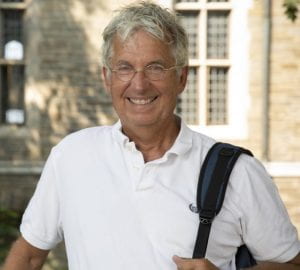
Charles Van Loan joined the Department of Computer Scientific discipline in 1975 as an assistant professor. He received his BS (1969), MS (1970), and PhD (1973) in mathematics from the University of Michigan. His research surface area is matrix computations, a applied field that has an of import role throughout the concrete, biological, and social sciences. Charlie's teaching and textbook writing range from freshman-level programming to upper-level scientific calculating. His research text Matrix Computations (with G.H. Golub) is one of the most widely cited books in all of mathematics and reckoner science. He is a Fellow of the Club for Industrial and Applied Mathematics.
Charlie's contributions to student life include serving on the University Mental Health Council and the Faculty Informational Committee on Athletics and Concrete Instruction. He received the pinnacle awards for academic advising that are given by the Higher of Engineering and the College of Arts and Sciences. As a member of the Department of Figurer Scientific discipline, he served as Manager of Undergraduate Studies (eight years), Director of the Primary of Engineering Program (3 years), Director of Graduate Studies (5 years), and Department Chair (vii years).
Charlie was the commencement emeritus kinesthesia member to serve as Dean of Faculty. He took a number of steps to improve communication to the faculty including the very spare merely extremely effective weekly "Monday Message". He also adult a comprehensive website that enables the faculty to access a renovated Kinesthesia Handbook and runway what is going in the Senate and the ad hoc committees that information technology appoints to have on major issues and issues. Senate meetings during the pandemic doubled in frequency and were run past Charlie in a way that enabled a smashing deal of business to be completed.
During his five years he chaired or co-chaired committees that revised the academic calendar, developed a university policy for consensual relationships, and smoothed the procedure for condign an emeritus faculty fellow member. He improved the condition of the research, teaching, and extension faculty giving them representation in the Senate. With others Charlie improved the style research misconduct cases are handled and the criteria for excellence in didactics that is used past the Weiss Awards Committee. With Associate Dean of Faculty Neema Kudva he co-chaired working groups that proposed the cosmos of a Center for Racial Justice and Equitable Futures and related educational programs for students and faculty.
Michael Fontaine
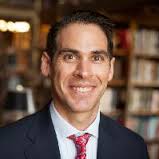
Mike Fontaine joined the Department of Classics in 2004. Widely known for his research in Latin literature and Roman social club, Mike twice served as the Paideia Professor for the Living Latin in Rome programme. This is a unique summertime program that brings outstanding undergraduates from all over the earth to Rome where they learn to write and speak Classical Latin amid the aboriginal ruins. Mike served equally the Manager of Graduate and Undergraduate Studies in Classics for a number of years.
Mike served with dandy distinction as the Interim Dean of Faculty during the spring semester in 2016. Drawing upon his experience as the Acquaintance Dean of Kinesthesia (2011-2015) he represented his colleagues with both grace and sense of humor during a semester that was filled with tragedy and controversy. Sensitive to the isolation that is sometimes felt by new kinesthesia, Mike pioneered the "Faculty Speed Meeting" program. This program stages several festive events during the yr that enable faculty to meet colleagues from effectually the university.
Joseph Burns

Joe Burns joined the Department of Theoretical and Applied Mechanics in 1966. A world-renowned planetary scientist specializing in celestial mechanics, Joe is a Swain of the American Geophysical Union and the American Association for the Advancement of Scientific discipline. He is also an honorary fellow of the Royal Astronomical Guild, a fellow member of the International Academy of Astronautics, and a foreign member of the Russian University of Sciences. Joe served on the NASA imaging teams for the Cassini (Saturn), Galileo (Jupiter) and Rosetta (Comet) missions. He is the Irving P. Church Professor of Engineering science and Professor of Astronomy and served as the Vice Provost for Concrete Sciences and Engineering 2003-2007.
Every bit Dean, Joe maintained respectful and collaborative relationships with kinesthesia, administrators, trustees, staff, and students. He responded graciously and speedily to concerns brought to him by faculty including numerous matters relating to appeals, academic conduct, and tenure. Joe served proudly and conscientiously on the search committee that selected Elizabeth Garrett. He elevated the level of discussion well-nigh faculty renewal and regularly staged Faculty Forums on cardinal campus issues. Nether Joe's leadership the Academy Faculty Committee worked to improve shared governance and the degree of transparency exercised past the administration. The cardinal to his success as Dean stemmed from the fact that everybody loved working with Joe.
William Due east. Fry
Nib Fry came to Cornell beginning as a graduate student in 1966 and and then returned to the faculty in 1971. He has been an assistant, associate and total professor in the Department of Establish Pathology (now Establish Pathology and Microbe-Biological science). His scholarly specialization has been the late blight disease of potatoes and tomatoes caused by the oomycete pathogen, Phytophthora infestans. His lab confirmed major worldwide migrations of this pathogen during the latter quarter of the 20th century and predicted implications to irish potato product earth wide. His educational activity has included introductory plant pathology and epidemiology and direction of plant diseases.
His authoritative duties have included various responsibilities. He was chair of his department from 1981 through 1995. He was president of his national professional order from 1995 to 1996. From 1998 to 2002, he was a Faculty Trustee on the Cornell University Lath of Trustees. From 2001 into 2007 he was Senior Associate Dean of the College of Agriculture and Life Sciences. In spring 2008 he was elected Dean of the University Kinesthesia.
He views the kinesthesia every bit fundamental to the strength of the university. It is their scholarship that establishes the reputation of the university, their teaching that motivates and encourages students, their outreach that helps citizens, and their governance that provides a concerned, sometimes passionate, vocalism on a wide variety of bug facing the academy.
Charles Walcott
Charles Walcott came to Cornell in 1981 as Professor of Neurobiology and Beliefs, and Director of the Laboratory of Ornithology. In 1992, he was named the get-go Louis Aggasiz Fuertes Director of the Lab. He was Managing director of the Sectionalisation of Biological Sciences (January 1998-June 1999), and Chair of the Department of Neurobiology and Behavior (1999-2001).
Professor Walcott served as Associate Dean and Secretary of the University Faculty for three years prior to his being elected Dean of the Academy Faculty in 2003. He views the Kinesthesia as the cadre of the University; believes that strong and effective Kinesthesia governance is essential for Cornell's time to come; and that the Kinesthesia and the Administration must work together to determine bookish priorities for Cornell and to ensure adequate fiscal support.
J. Robert Cooke

J. Robert Cooke, Agronomical and Biological Engineering science, was a member of the Academy Faculty for 32 years prior to his election as Dean of the University Faculty. He also served as Manager of Education for the College of Agriculture and Life Sciences, Speaker of the Faculty Senate, Faculty Trustee, and University Marshall (presiding at Outset).
During his term as Dean, he kept the Faculty informed on all issues within the scope of the faculty's responsibilities, i.eastward. Distance Learning, the reorganization of the Division of Biological Sciences, Reckoner Sciences, and Scholarly Publishing, among others.
Professor Cooke retired and was named Professor Emeritus on September one, 2005.
Peter Stein
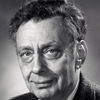
Peter C. Stein, Physics and Nuclear Studies, came to Cornell as a Research Associate in 1956, and subsequently appointed a fellow member of the Faculty. He served as Vice Provost in the early 1980s. He also was elected Kinesthesia Trustee from 2000-2004.
Professor Stein chaired the Faculty Commission that devised the University procedures enabling kinesthesia to appeal decisions on promotion and tenure; and wrote the report "Conflicts of Interest and Commitment: Ethical Questions and Dilemmas for Kinesthesia Members" which led to the establishment of the University Committee on Conflicts.
He brought fundamental alter to the Office of the Dean of Faculty when the Faculty Quango of Representatives was reorganized and became the Faculty Senate. He was also instrumental in how the Faculty's Fiscal Policies Committee and the Administration dealt jointly with monetary issues.
Walter R. Lynn
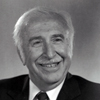
Professor Walter R. Lynn became a fellow member of the Civil and Environmental Engineering Faculty in 1961. He directed the Program on Science, Technology, and Society for eight years, and served as Director of Cornell's Eye for Environmental Research, and Director of the School of Civil and Environmental Engineering. He also served as Kinesthesia Trustee from 1980-85, and as a fellow member of the Board of Directors of the Cornell Enquiry Foundation.
During his term equally Dean of the University Kinesthesia, he recognized several bug that faced the Faculty, including the quality of undergraduate education and the status of federal back up for research, amid others. He was instrumental in the establishment of the Weiss Teaching Awards recognizing outstanding undergraduate teaching faculty.
Professor Lynn was named Emeritus on February 1, 1998, and afterwards served as Academy Ombudsman for twelve years. He passed away on June half-dozen, 2011, at that age of 82.
Joseph B. Bugliari
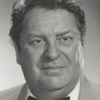
Joseph B. Bugliari, Agricultural and Business organisation Police, joined the Cornell Faculty in 1961. He served as Secretary of the Faculty (1979-82), Director of Legal Services (1977-79), and as the offset Judicial Administrator (1969-71).
In his function as Dean of the University Faculty, he started the practice of speaking regularly to the Board of Trustees. He was universally lauded as an able diplomat and for his vigorous pursuit of faculty interests, and in promoting constructive dialogue between the Assistants and the Faculty.
Professor Bugliari was named Emeritus in 1992, and on the occasion of his retirement, he received a number of well-deserved tributes from Faculty and University administrators for his substantial and important service to the University. He passed away on October 20, 2002.
Kenneth Greisen

Kenneth I. Greisen completed his graduate work in physics at Cornell in 1942. He and then joined the large team of physicists working for the Manhattan Projection at Los Alamos, New United mexican states in 1943. He was a fellow member of the squad that worked on the detonation arrangement for the kickoff atomic bomb.
He joined the Physics Department as a faculty member in 1946. He served as University Ombudsman from 1975-77, prior to his election as Dean of the University Faculty. During his term as Dean, he often rode his bike to Day Hall, and parked it in the spot where someone had posted the sign, "Reserved for Dean of Faculty".
Professor Emeritus Greisen passed away on March 17, 2007 at the historic period of 89.
Byron W. Saunders
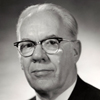
Byron W. Saunders joined the Faculty at Cornell in 1947 in the Sibley School of Mechanical Engineering. He served as Director of the newly reorganized School of Industrial Engineering science and Operations Research, a position he held for 10 years; and was Director of Continuing Education in the Higher of Technology for 3 years.
Every bit Dean of the University Faculty, Professor Saunders exhibited loyalty, integrity, and high moral and performance standards. His exhibited strong support for academic freedom during the so-called Ky incident in Dec 1975, when a speech past then Vice President Ky of South Vietnam was disrupted by those protesting his policies. Dean Saunders urged the Faculty to take a stand on the result, stating in his annual report: "At that place can exist no honest search for truth, no honest hearing of differing opinions and differing perceptions, if 1 allows the closing off of views, no matter how objectionable they might be or how objectionable the people who are voicing these views."
Professor Saunders retired in 1979 and was named Professor Emeritus. He passed away on January 4, 1987.
Norman Penney
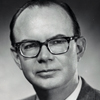
Norman Penney, Professor of Law, held positions every bit Manager of Admissions, President of the Constabulary School Admissions Council, Acquaintance Dean, and Interim Dean of the Law School.
He was elected Dean of the University Faculty past more votes than the combined votes of the other candidates. Dean Penney provided valuable counsel for the President and other senior administrative officers and earned the respect of all. He effected the organization of the Faculty Council of Representatives. Post-obit his term as Dean, he was elected Faculty Trustee.
He took early retirement from Cornell, and joined the Washington College of Law of American University, in June 1981. Belatedly on December xxx of that twelvemonth, the Cornell campus was saddened to acquire of the decease of Professor Penney in his apartment in Washington, D.C., after an apparent burglary
Robert D. Miller
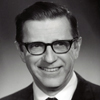
Robert D. Miller was appointed to the Faculty in the Department of Soil Science in 1952. He served equally Assistant to the Provost from 1964-65, and served on numerous committees in the College of Agriculture and Life Sciences.
As Dean of the University Faculty, he successfully led the Faculty and the campus during a time of racial unrest, protests, and the takeover of Willard Straight Hall in 1969.
Professor Miller retired and was named Emeritus on September i, 1987.
Royse P. Spud
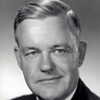
Royse P. Tater, Constitute Breeding, began his career at Cornell in 1946. He has served as head of the Section of Plant Breeding, Speaker of the Faculty of the College of Agronomics and Life Sciences, and as Kinesthesia Trustee; in improver to his service on many college and University committees.
He resigned as Dean of the University Faculty later on serving three years in order to return to teaching. The first year of his deanship he taught a graduate course in the Agricultural Higher only gave up the idea considering he did not take time to spend with students. He said he would like to see the Dean go along to be involved in teaching and recommended a supporting staff for the Role of the Dean of Kinesthesia.
Professor Spud retired and was named Emeritus on July ane, 1979.
Thomas W. Mackesey

Thomas W. Mackesey began his career at Cornell in 1938 in the Department of City and Regional Planning in the College of Architecture, Art and Planning. From 1951-60, he was Dean of the College.
During his last twelvemonth as Dean of the University Faculty, President James Perkins asked him to serve as Vice Provost for Planning and after Vice President for Planning. By firmly establishing certain key campus planning processes and principles, he contributed wisely and permanently to the evolution of the unique Cornell surround.
He retired from Cornell in 1974 and was named Professor Emeritus. He passed away on May two, 1976. At the time of his death, then President Dale Corson said that Tom Mackesey ".has left behind a legacy in the form of some of the nigh beautiful buildings on campus, buildings synthetic nether his leadership."
C. Arnold Hanson
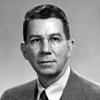
In 1945, C. Arnold Hanson enrolled as the start graduate student in Cornell's newly established field of Industrial and Labor Relations (ILR), and was awarded its starting time Ph.D. degree in 1948. He was amidst the starting time scholars to examine labor arbitration awards as a ways of agreement labor relations issues. Post-obit receipt of his doctorate in 1949, he was appointed to the Faculty in the School of Industrial and Labor Relations, was named manager of the School's Office of Resident Educational activity, likewise equally graduate field representative. These positions he held until his departure in 1961.
Professor Hanson was appointed Dean of Kinesthesia in 1957 at a time when loftier tension existed between the President and Faculty regarding their corresponding areas of authority. He proved a true and constructive representative of the Faculty's interests, a well-organized administrator of the dean's role, and the force contributing to campus community.
In 1961, when Professor Hanson left Cornell, he became President of Gettysburg Higher until his retirement in 1977. He passed away on June 19, 1983.
William H. Farnham

William H. Farnham joined the Faculty of the Constabulary School in 1926 where he served until 1964. He twice served as Secretary of the Law School; and from 1942-43, Acting Dean of the Law School. In that capacity, he kept the school in session on a twelvemonth-round footing, providing the foundation for managing the influx of the large number of veterans in the late 1940s.
He became Dean of the University Faculty in 1952 and provided outstanding leadership in strengthening the Faculty's office in the governance of the University. He presided with care and precision over the Kinesthesia'south complex commission system, and saw to it that the Faculty'south viewpoint on basic questions of educational policy was clearly and effectively communicated to the President and the Lath of Trustees. That ability was especially important considering during his tenure, the cardinal question of control over student affairs came into sharp focus.
Professor Farnham passed away in Ithaca on August 14, 1985.
Carelton C. Murdock

Carleton C. Murdock came to Cornell's Physics Section in 1908. He will be remembered equally the personification of the legendary professor, a human being whose very presence created an atmosphere of dignity and humanity, of intellect and service.
He was elected Dean of the University Faculty in 1945 and brought to the office an unfailing dignity and courtesy, together with strength and wisdom, during a time of difficulty for the Academy. Following the end of Earth War Two, a surge in enrollments occurred, but then did inflation that eroded the value of Faculty salaries and impaired Faculty morale. The emergence of McCarthyism securely unsettled the campus. The retirement of President Day left the campus groping for leadership. During those times, Dean Murdock gave stability to a shaken faculty, and his term was extended until a new president had been installed and his own retirement was at manus. Professor Murdock retired as Professor Emeritus in 1953.
He passed away on June v, 1971.
Cornelius Betten
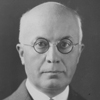
Cornelius Betten arrived on campus in 1915, following the establishment of the New York Country Higher of Agriculture. He was a Professor in the Entomology Department and also served in the administrative positions of secretary and registrar in the college. He served equally Acting Dean of the College during Dean Mann'south absence on two occasions; and became an active leader in the resident instruction section of the Association of Land Grant Colleges and Universities.
Upon William A. Hammond's retirement as Dean of the University Faculty in June 1930, a vacancy existed in the Deanship until 1932, when the President recommended, with the Kinesthesia's approving, that Cornelius Betten fill the position. In 1940, he resigned the directorship of resident instruction in the higher, and served full-time every bit Dean until his retirement from the University in 1945, whereupon he was named Professor Emeritus. Professor Betten passed away in Hamilton, Ohio on August 23, 1962.
William A. Hammond
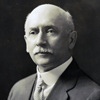
William A. Hammond came to Cornell in 1891, and was named Sage Professor of Ancient Philosophy in 1908. He served equally Secretary of the Faculty from 1909 until 1920, at a time when the Dean of Faculty position was vacant. The President later on appointed him Dean in 1920. He never lost sight of the purpose of a academy – as expressed by the spirit of Andrew D. White – that of academic scholarship and university authorities, grounded upon the principle of bookish freedom.
Following 39 years of service to the University, Professor Hammond retired in June 1930, when he was chosen to Washington, D.C. equally a consultant in the Library of Congress. He passed away in Washington in May 1938.
Thomas F. Crane
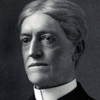
Thomas F. Crane was one of a notable group of teachers who formed the original Faculty of Cornell in 1868. He often spoke of having seen Cornell abound out of its swaddling apparel into i of the leading institutions of the state. He liked to remark that he knew the campus when information technology was a barren hilltop, before the shade trees were prepare out. His life had been associated with Cornell unremittingly since its founding, and the pseudonym of "Teefy" found a lasting identify in college vocal and tradition, i.e. "Give my regards to Davy-remember me to Teefy Crane" – the first song a freshman learns.
Professor Crane was associated with the Department of Romance Languages for over 40 years, retiring in 1909 every bit Professor Emeritus. He was the first Dean of the College of Arts and Sciences prior to his becoming Dean of the Faculty; and also served as Acting President on 2 occasions during President Schurman's absenteeism.
Professor Crane passed away on December nine, 1927 at DeLand, Florida, where he had intended to spend the winter with his sis.
Horatio S. White
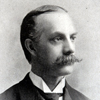
Professor Horatio S. White was associated with Cornell for 25 years every bit Professor of German language Language and Literature. He served as Dean of the General Faculty, and upon the reorganization of that position in 1896, every bit Dean of the University Faculty, for a total of 13 years.
Professor White distinguished himself as a scholar, teacher, and administrator, always loyal to the all-time interests of the University, and always helpful in promoting them in cooperation with the Faculty and with the student trunk. He was well regarded for his sanity of judgment, his unfailing courtesy and tact, his generous thoughtfulness for the interests of others, and his kind impartiality and patience in inquiry.
Upon his resignation from the deanship to accept a professorship at his Alma Mater, the University Kinesthesia entered an expression of its gratitude for his long and faithful service.
Henry S. Williams
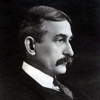
Henry S. Williams was born in Ithaca, graduated from Yale, and returned to Ithaca to teach at Cornell from 1879 until 1892. He returned to Yale for 12 years, and in 1904, once again returned to Cornell in the Geology Section until his retirement as Professor Emeritus in 1912.
He had a lifelong clan with the United states Geological Survey, and was the intellectual father of Sigma Xi. He was the commencement president of the Alpha Chapter of Sigma Xi in 1887.
He endeared himself to his students past his unselfish devotion to them, and to his colleagues in the Faculty. He won the affection and respect of the Board of Trustees by his sterling qualities equally a man and his attainments every bit a scholar.
Professor Williams passed away in 1918 in Havana, Cuba, where he was profitable his son with farming and mining ventures.
Charles Schaeffer
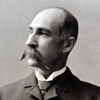
Charles A. Schaeffer, Chemistry, was affiliated with Cornell for 18 years. He was devoted to the interests of his department, and took a prominent and efficient share in all Faculty activity affecting the full general policy of the University. He exhibited great practical sense, a well-balanced judgment and thorough administrative capacity in his position as Dean of the General Kinesthesia. The artlessness of his character endeared him to colleagues and pupils akin.
Professor Schaeffer'due south fondness and aptitude for authoritative affairs led him to accept a position equally President of the Academy of Iowa. He passed away in 1898 while serving in that capacity.
George Caldwell
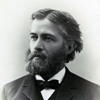
Andrew Dickson White hired George Caldwell as Professor of Agricultural Chemistry, at the establishment's inauguration in 1868. He was the first professor appointed to the faculty of Cornell, and too the kickoff owner of a microscope on Cornell's Faculty at a time when there were only iv in the entire boondocks. Professor Caldwell presided for 34 years over the Chemistry Department, while it grew from a small class-room and laboratory until it taxed the capacity of 2 large buildings with a instruction staff of 21 – one of the leading centers of chemical instruction and accomplishment in the world. In 1892, he was elected to the presidency of the American Chemical Society. The Faculty early recognized his capacity for accurate and excellent work. His work with all University departments rendered him a trusted and valued adviser in all matters of university policy during his term as Dean of the General Faculty. Professor Caldwell retired in 1902, and passed away on September 5, 1907. His proper noun is a retentiveness of the early builders of the University. Caldwell Hall, opened in 1913, was named for George Chapman Caldwell.

Source: https://theuniversityfaculty.cornell.edu/about-2/dof-history/
0 Response to "Cornell University College of Arts and Sciences Deans Office"
Post a Comment